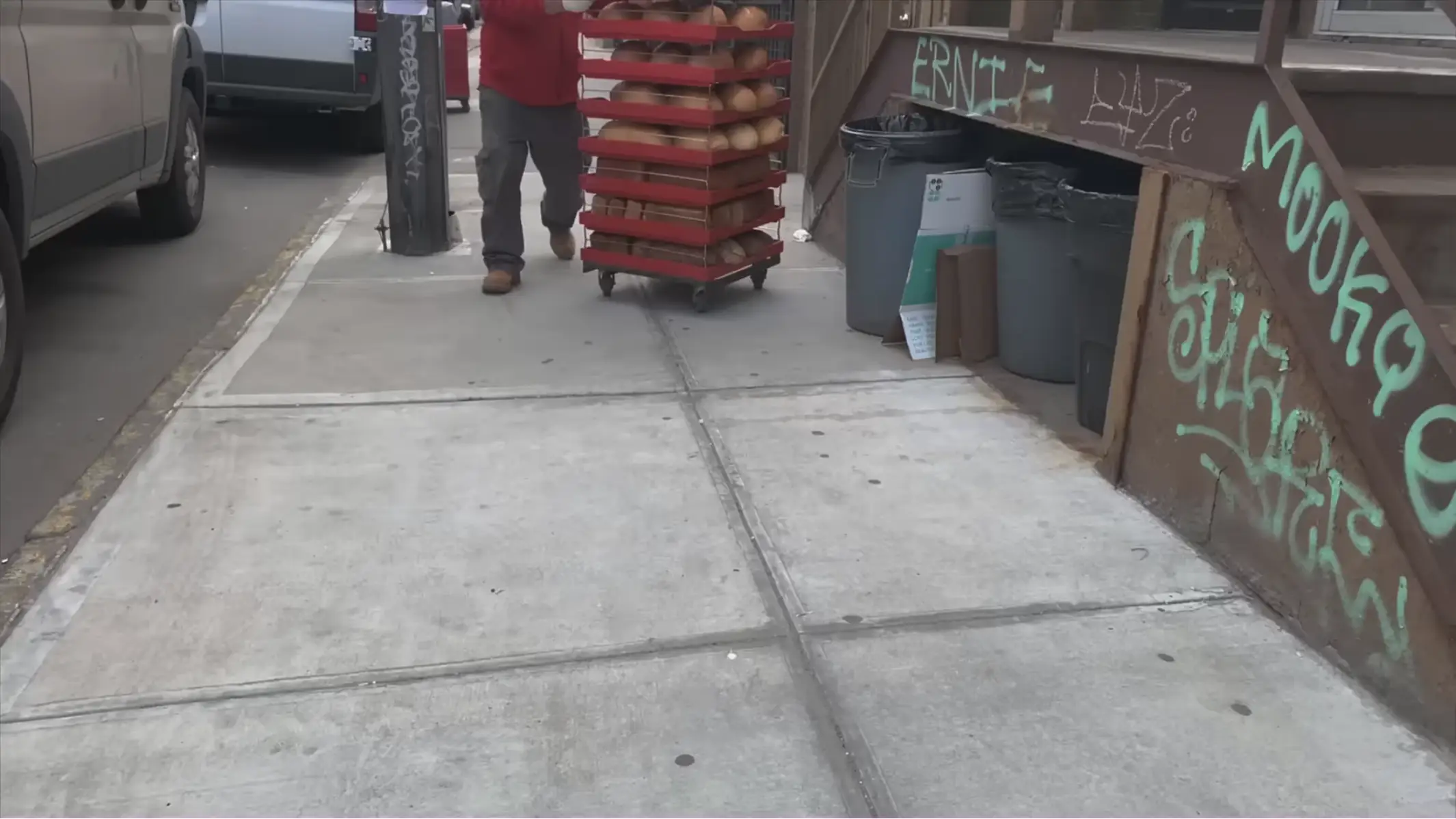
"basically every time theres a glitch in the matrix, thats when I pull out my camera and start filming" - John Wilson
i. reversed
The other day, I was hanging out with a friend, and we wanted some visual noise to put on the tv while we hung out, I wanted to put on Koyaanisqatsi, so I looked it up on youtube hoping to find someone had uploaded it, its the kind of film that I felt you could reliably find on youtube, its a strange experimental doc from the 70s, but the version I found on youtube was far stranger. The first search result that seemed like the actual movie, was, in fact the actual movie, played entirely in reverse.
The film now opens on a rocket launch, the grand narrative of humanitys trajectory now starting at 1969 and working its way back to neolithic cave paintings. The footage of the rocket is even more mesmerising in reverse, the chant that permeates the films sountrack feels even more alien and cultish.
We then cut to footage of us, society, footage of people in crowded cities, the movement of their faces feels surprisingly natural, which makes the awkwardness of their backwards walking even more jarring.
Someone buys an ice cream, a disheveled man looks at a coin in his hand, we see people in hospital beds, and them a firefighter amongst some wreckage. This entire sequence is far less optimistic in the reversed version.
The film documents a time and place that many "creatives"(i hate that word) mythologise, New York in the 70s, but rather than depicting the art scene, we see the suits, businessmen entering and exiting anonymous office buildings.
Computers give way to the suburbs, which give way to television and then in turn the assembly line. This is all interspersed with breathtaking timelapses of cars driving on urban highways, its as if this film achieved what Tarkovsky was aiming for in the Solaris Japan scene.
We see junctions fill and empty with cars driving eternally in reverse, we then see those cars disassembled in the factoris they were made in.
You see ghosts drift in and out of bowling alleys, cinemas theaters, this portrayal of mass media presents the question: How would these filmmakers protray social media?
As we see the iconic wide shots of skyscrapers that many associate with the movie, it sounds like its raining.
Between the images of building demolition, I recognise one from a lecture on gentrification, this time I see the video, its rising from the ashes of its own destruction.
The war segment comes as a jumpscare, whereas it creeps up on the proper version.
A later(earlier) segment depicting mining and other resource extraction through violent means provides us with the first sign of civilisation in the original, now its the last.*
ii. contextualised
In a promotional/directors commentary video for his first season of "How To With John Wilson", John Wilson describes how he cobbles together his show. He describes how he films a documentary as playful, and then gives an example of a moment that he found interesting enough to include in the show:
"The very first thing I shot was this guy who had tied this loaf of bread to a subway pole. To me it was really suspenseful to watch because I dont know if this guy was going to miss his stop because he had to untie the bread, so I kept filming for a while. Eventually this guys stop came and he untied it really quickly, and worked his way out of the subway and got onto the platform."
John's producer was very confused about this footage and in response,
"I went out and I started to shoot alot more."
"john started sending me alot more shots of bread, someone pushing loaves of bread, just bread... in different scenarios, and was just saying stuff like 'I wanna do stuff, with this bread', and I was like, 'John, this is HBO, what are we doing here'"
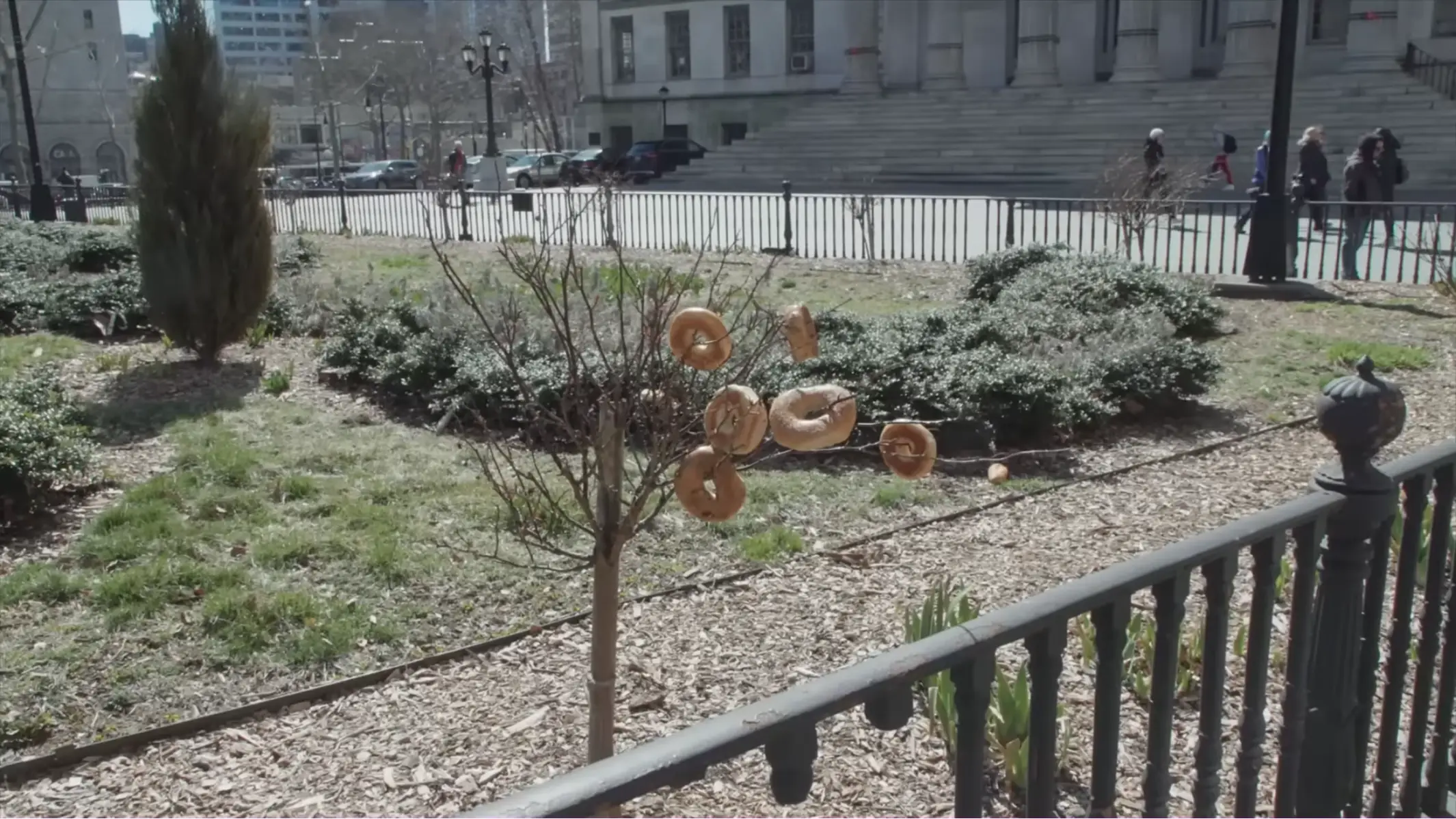
"I just kept telling him that, like, this is the magic of the show, like, the fact that we can show stuff like this, this is the show."
Wilson's style of filmmaking is, as I've demonstrated, experimental and playful, rather than expository. Instead of explaining the significance of the bread to his producer, he contextualises it. He interprets the producers note as "something isnt working" and then alters the film accordingly in hopes that it clarifies the episode. In an interveiw with Joshua Citarella, he describes his approach to his new feature documentary about concrete;
"I don't know, I try to do as little research as possible at a point, and I read one really good book about concrete and then...[gets interrupted by interveiwer and subsequently loses train of thought]"
We see again, that Wilson has a film first approach, instead of doing rigourous research to contextualise his footage, he just uses more footage. According to Wilsons philosophy, the documentarian is here to document, not educate.
We often associate documentaries with education, and of course, they are largely informational of course, but we see here that Wilsons primary directive is to make art. He wants to share his perspective on the world, he wants us the rethink how we see the world, he's chasing a sort of artistic truth here. He says in the first video: "Alot of the show is really built in the edit, the most fun I have is trying to create metaphors or poems".
iii. edited
If as C Thi Nguyen suggests; "art is a game", then making it must have a playful aspect. Nguyen says in the score(p.304): "you can adopt this aesthetic attitude toward official art, but it's not just confined to the museum. You can take up the aesthetic attitude toward nature, toward cozy neighborhood parks, toward ordinary household tools-toward literally anything. For Stolnitz, the aesthetic attitude was for open seeing; you could take that attitude toward everything, everywhere."
John Wilson takes the aesthetic attitude toward bread, but it might be useful to consider what game hes playing. I think that John Wilson, and by extension all documentarians are playing "I spy". The aim of I spy is, of course, to find a shared meaning by isolating a part of your enviornment. On a roadtrip, someone says "I spy something the shape of the letter u", and then the other player tries to find this in their enviornment until they discover that p1 means the wallsocket horseshoe. Similarly, John Wilson films the bread and he feels that this scene has meaning, it has an essence to it, he then shows us the video in hopes that we can also extract that same essence.
If documentary filmmaking is a game of "I spy", the reflective controls, the difficulty options, lie in the edit. Wilson contextualises his bread scene to try to make the essence easier to access for his producer, he gives more clues to make the game easier. On the other hand, the reversed version of Koyaanisqatsi I played is like a hard mode, one of those infamously challenging doom mods. It made the essence of Koyaanisqatsi harder for me to access but it made me reconsider the movie, it made it more cathertic to beat.