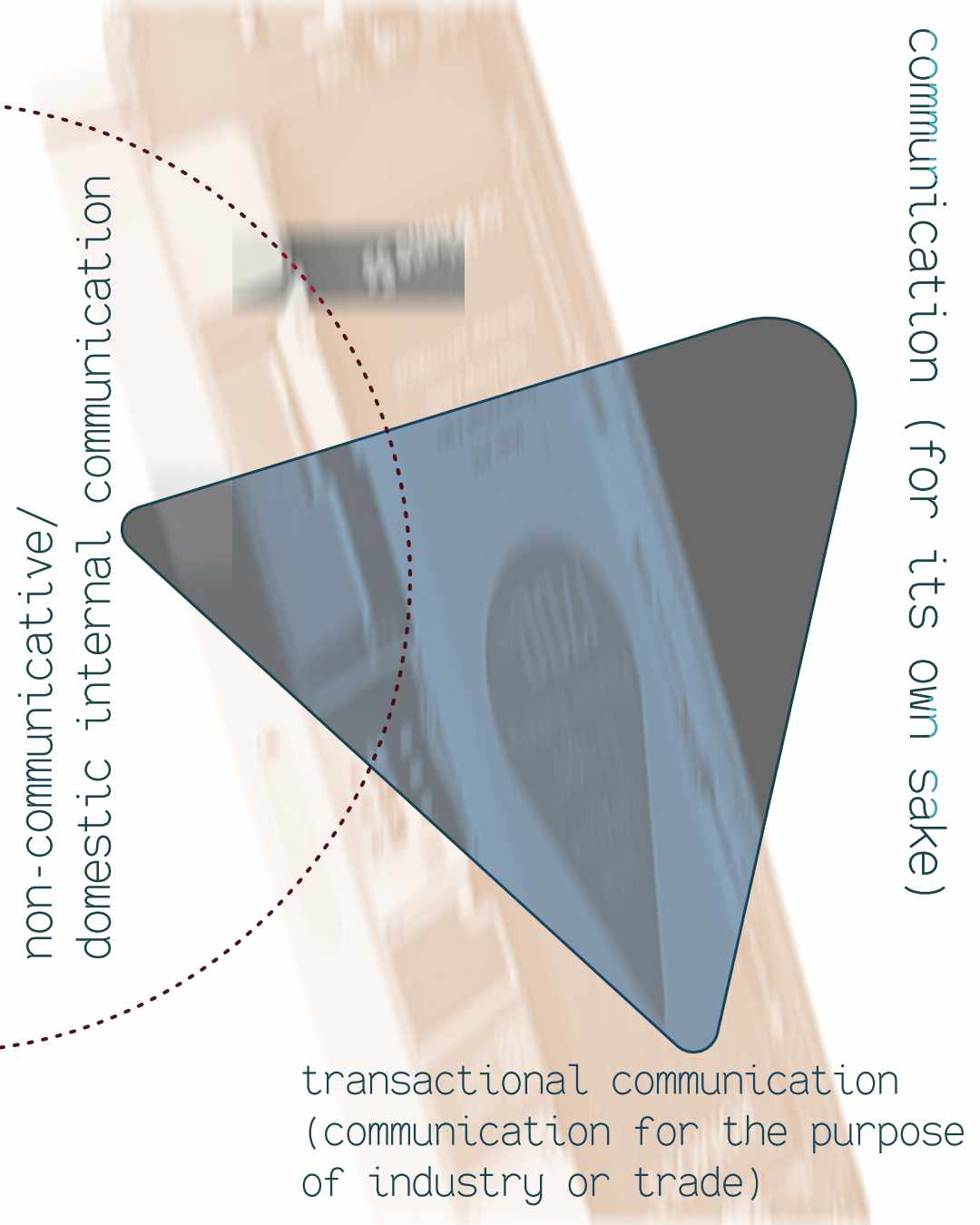
This model of the western internet creates a distinction between 3 internets, depending on their functions. I call these the "attic", "warehouse", and "town square" internets, these names describe a function of each internet, but dont encapsulate the entire segment. I just like the names. This model can primarily be understood as 3 axes, or 3 2-way relationships(there is another way of understanding and using this model, which I will get to later).
1. attic/warehouse
The relationship between the attic and warehouse internet is the easiest to explain, because it can be very easily analogised. In essence, this relationship is online shopping. The transfer of products(a product being anything that is created) between a warehouse and a home. The relationship is strictly transactional, it is solely about the transfer of a good or service, think online purchases, broadcasting, streaming, etc.
2. attic/town square
The town square internet is what I think most people envision the internet to be. This is the nebulous concept of "cyberspace", mass communication at a scale never seen before, and to use an overextended term, a democratisation of those tools of communication. This is social media, and before that the blogspace, the technology that allowed the mimetic idea to become as ubiquotous as it has. It's relationship with the attic internet is harder to quantify, but I think the best illustration is that the DM is a sort of bridge between the two, it exists on the intersection of the dotted line and the solid one connecting these two in the diagram above.
3. town square/ warehouse
This is the "back end" of the internet, so it might be the hardest to visualise, I'm certainly having the hardest time trying to explain it. The best way I think I can describe is that it exists in the intersection of memes and industry, but that doesnt 100% capture it. It is kind of unknowable, even though there are people here, it is intentionally obscured, such being the nature of a back end. An argument could be made that this is where networking platforms like linkedIn and the gig economy(airbnb, uber, etc.) lives, I'm not entirely convinced by that, but maybe thats just my aversion to the blurring of the social and industrial, my not wanting this axis to exist but knowing it probably does.
Note on a nationalised internet
This map initially came from me trying to imagine what a socialist internet could look like, and that speculative aspect has informed it. While I think this functions as a model for the current internet(which is why I'm presenting it as such), it originated from a different intention. This is also why I don't want to seperate this into "capitalism/social", it may feel like an obvious way to seperate what I call "warehouse/town square" internet, but in reality there are virtually no social internets(I say this, government websites are probably a warehouse internet, but I think they probably have such little impact on the internet at large that I'm not countig them). The current state of the internet could be described as a very Victorian network of private infrastructure, with no state or democratically run alternatives.
Also note that this is a western model, I understand that the chinese internet is a different beast entirely, and should probably be understood through a different framework, which I am not equipped to make.
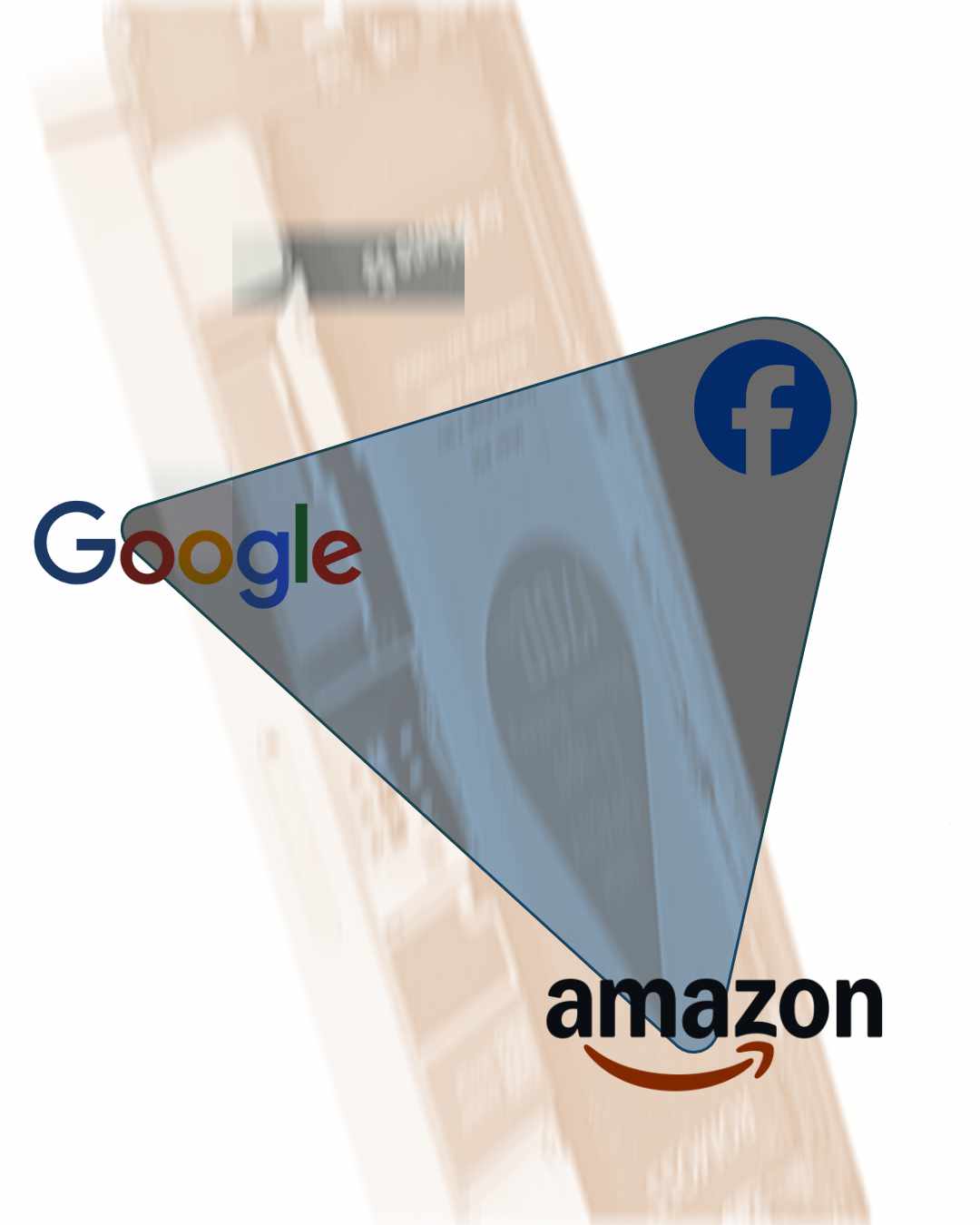
My confidence in this map was solidified when I started placing companies in it, the three major players comfortably finding a niche. These companies all try, with varying successes to expand their enterprise but ultimately they comfortably fit in this sort of symbiotic triangle. I think this represents, not necessarily *the* natural state of the internet(see: China), but a natural set of functions for it. The relative lack of competition in these spaces implies to me some form of equilibrium in this state.
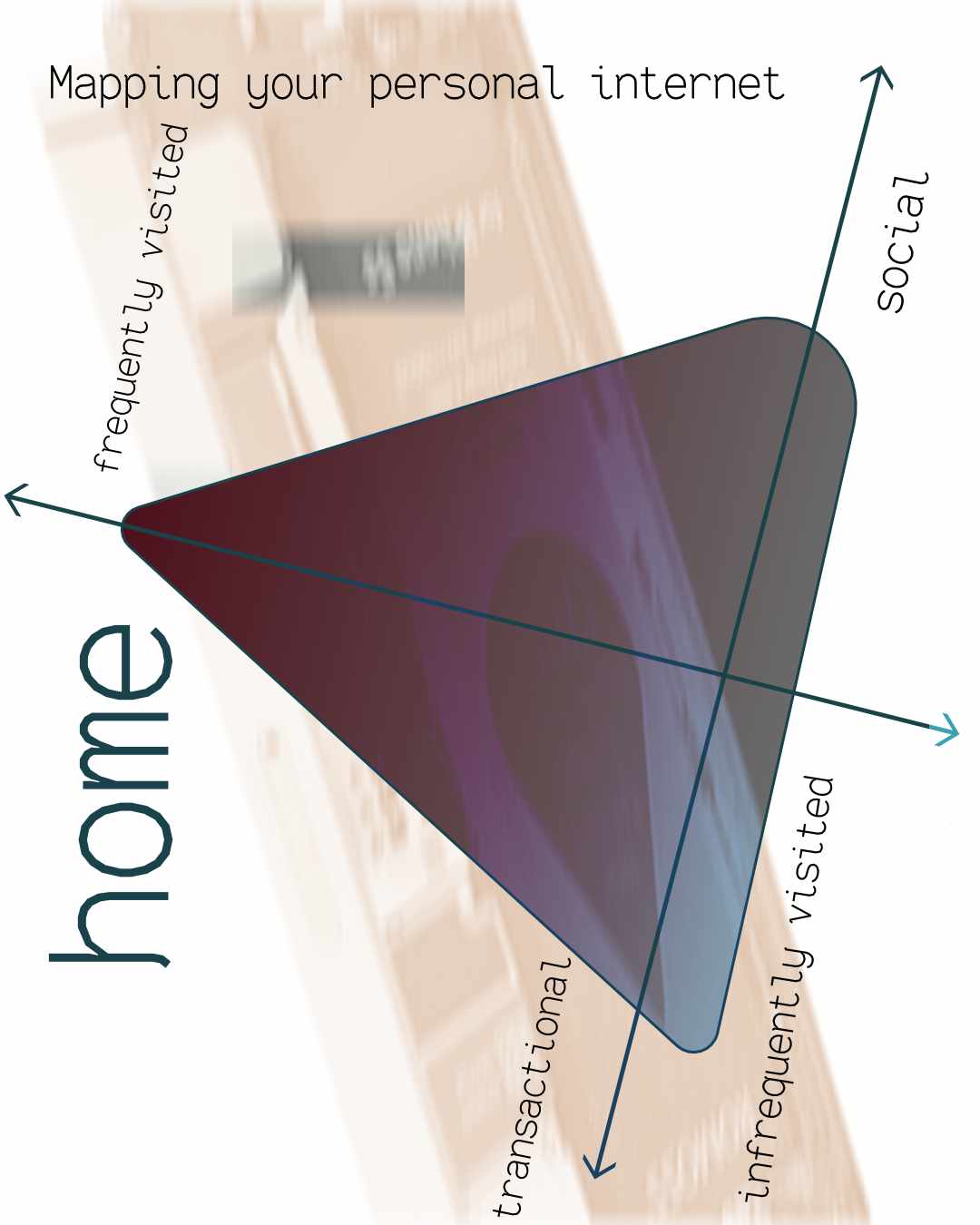
This is not quite the same model, but it is a model with the same shape. This chart can be used to measure your relationship with the network of sites, platforms, and digital spaces that is the internet. Because this adapts the model to 2 axes, it should resemble a compass, but I think it would still retain the shape, given there are way more internet pages you visit once, than pages that you would visited 100s of time.
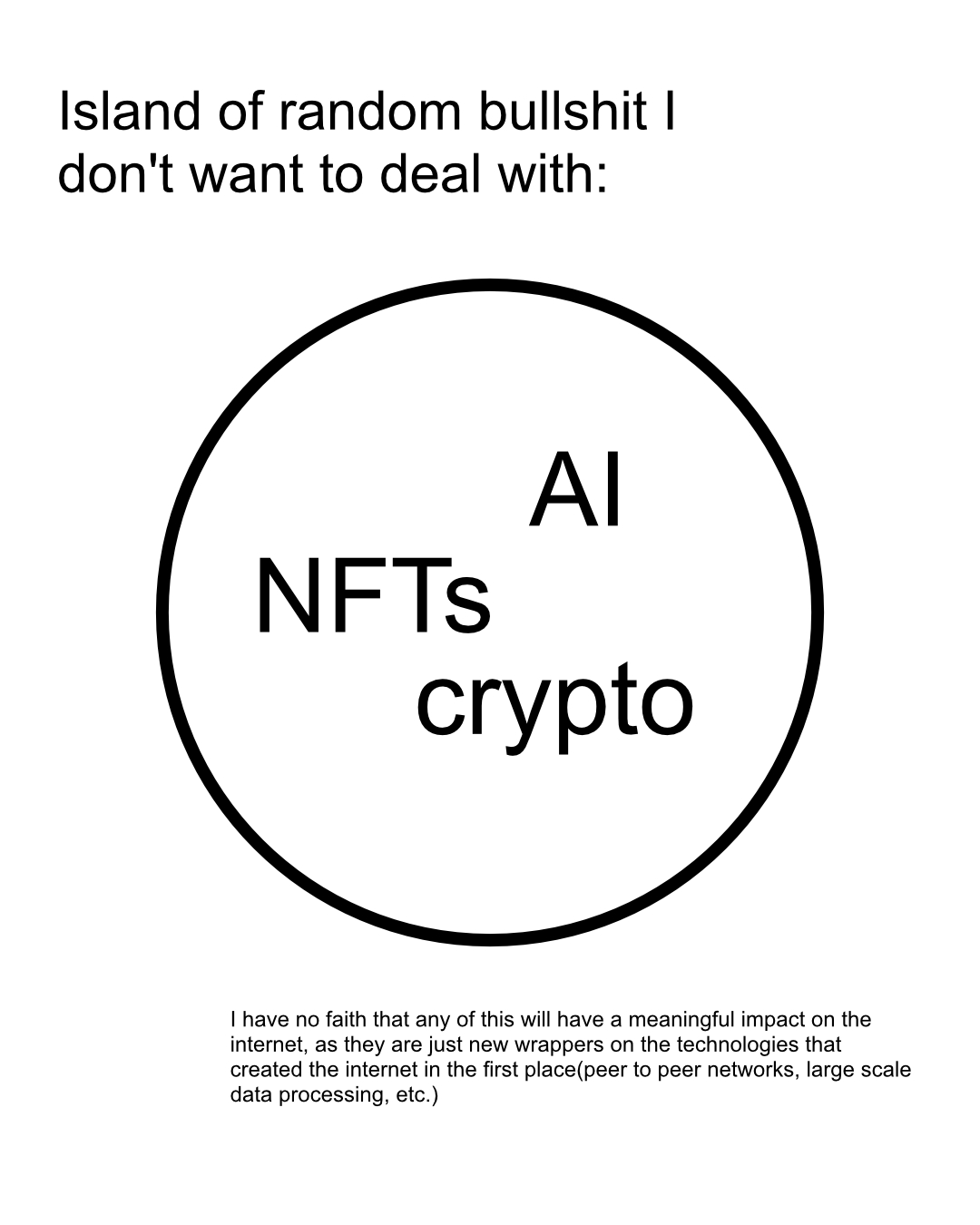
caveat: to cover the holes in my model, I'm putting everything I don't care about here.This way you can't complain at me for leaving out your favourite internet- eh- thing.